
Read our latest news!

Leading health and environmental NGOs co-signed a letter welcoming the engagement of President-Elect von der Leyen to address chemical pollution, especially implementation of the non-toxic environment strategy, as part of the European Green Deal. The letter outlines our views on the essential benchmarks by which the Green Deal will be measured.
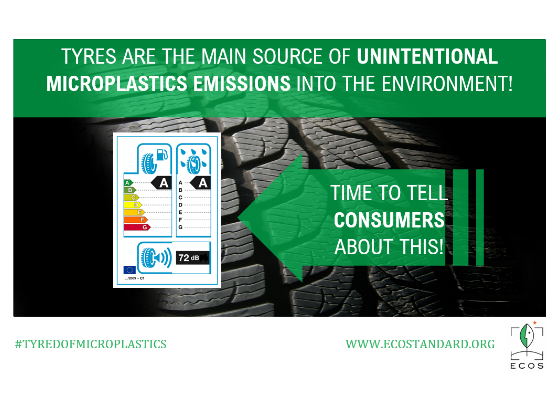
The European Parliament, EU Council and European Commission will have the second trilogue negotiations on the revision of the European tyre label early next week.

The construction sector accounts for about half of all extracted materials and energy consumption, a third of water consumption while generating one third of all waste. It is high on the EU policy agenda and an emerging priority topic for ECOS, since standards (can) play an important role to promote material-efficiency, decarbonisation as well as circular strategies in the sector.
The EU has recently paved the way for longer-lasting products. Now we must enshrine this ambition into our future European Green Deal, Coolproducts campaigners wrote in a letter to the incoming European Commission this week.

As part of the ENgage project, which looks at bringing environmental NGOs closer to standardisation, ECOS Programme Manager Lindsey Wuisan gave a presentation in Prague, to raise awareness on the importance of ecodesign and standardisation, at the national standardisation agency CAS.

The European Commission has just published its Annual Union Work Programme for European Standardisation for 2020. Well worth a read, it identifies priorities for European standardisation for the coming year.
ECOS is co-funded by the European Commission and EFTA

 Funded by the European Union. Views and opinions expressed are however those of the author(s) only and do not necessarily reflect those of the European Union or EISMEA. Neither the European Union nor the granting authority can be held responsible for them.