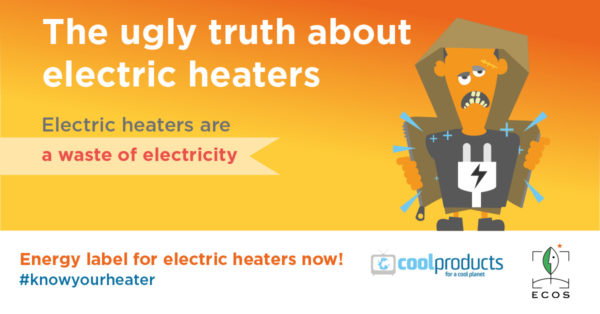
Do you #knowYourheater? Of course you don’t, how could you when it doesn’t even have an energy label?

ECOS Policy Director Christoforos Spiliotopoulos took webinar participants on a journey through the standardisation system and explained ECOS role in promoting and defending environmental interests in standardisation. The recording of the webinar is now available.

On September 24, in Brussels, DG Research and Innovation (European Commission) organised a meeting session on "The Future of Plastics". ECOS Head of Circular Economy Policy, Doreen Fedrigo was invited to speak about the impact of plastics on humans and the environment.

Newly adopted EU laws will make several products easier to repair and more energy efficient, saving people money as well as reducing pollution, NGOs in the Coolproducts campaign said.
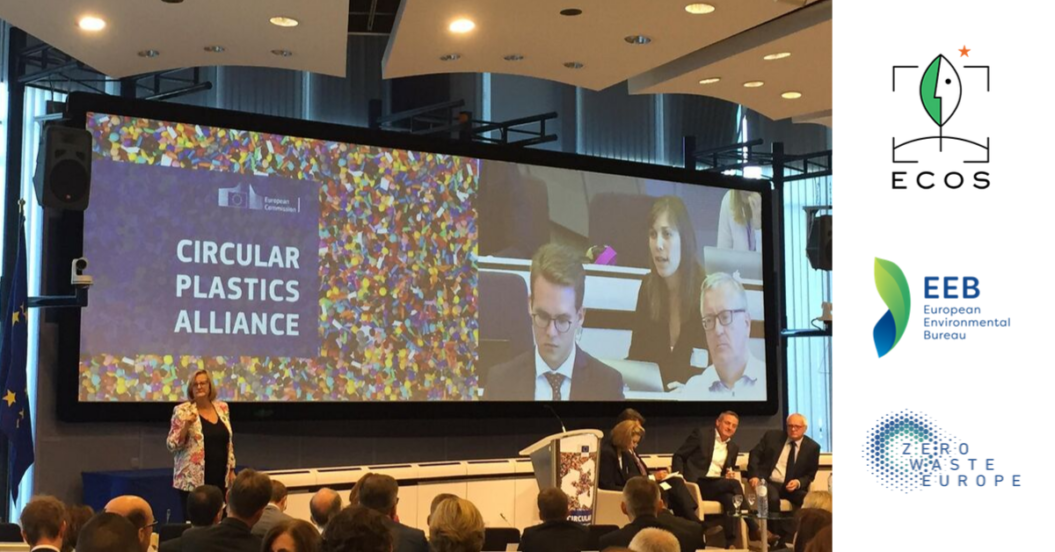
During a high level event held today, the Circular Plastics Alliance (CPA) signed a voluntary declaration to support the supply and demand of recycled plastic on the European market. ECOS, the European Environmental Bureau (EEB) and Zero Waste Europe (ZWE) ultimately decided not to sign the declaration, given the regrettable lack of ambition, transparency and NGO involvement in the drafting of the declaration - however they did acknowledge the need to ramp up the collection and recycling of plastics in general.

ECOS Standadisation Training, updates on ecodesign and spotlight on refrigerants with a NEW ECOS Factsheet! Read our latest news!

Together with over 50 NGOs ECOS signed a statement with ten priority issues on the EU "taxonomy" for sustainable investments launched by WWF today. The upcoming taxonomy aims to show which economic activities are sustainable to help guide investors and prevent greenwashing.
ECOS is co-funded by the European Commission and EFTA

 Funded by the European Union. Views and opinions expressed are however those of the author(s) only and do not necessarily reflect those of the European Union or EISMEA. Neither the European Union nor the granting authority can be held responsible for them.