
The Alliance for Flame Retardant Free Furniture (www.safefurniture.eu) - where ECOS is an active partner - is releasing a policy paper calling on EU-wide action against the use of flame retardants in furniture and bedding and for the EU institutions to tap into the potential of toxic-free safe fire safety in support of a circular economy.

Almost 90% of material resources used in the EU are lost after their first use. A lot more effort is needed to accelerate a systemic transition to a circular economy, to drastically reduce the EU’s absolute natural resource use and greenhouse gas emissions, respecting the planetary boundaries and striving towards the UN Sustainable Development Goals. To achieve this, the Prevent Waste coalition of European civil society organisations advocate for the improvement and enforcement of EU policies on waste prevention and product design.

In October, ECOS successfully co-initiated the launch of an advisory group at the International Electrotechnical Commission (IEC). The group will focus on environmental aspects of standards related to lighting products and systems and will inform the work of the dedicated technical committee at the international level.

ECOS Policy Director Christoforos Spiliotopoulos has joined the Advisory Council of EPEAT, an ecolabel with global outreach focusing on IT products, including computers, televisions, servers and mobile phones.

Read our latest news!

Leading health and environmental NGOs co-signed a letter welcoming the engagement of President-Elect von der Leyen to address chemical pollution, especially implementation of the non-toxic environment strategy, as part of the European Green Deal. The letter outlines our views on the essential benchmarks by which the Green Deal will be measured.
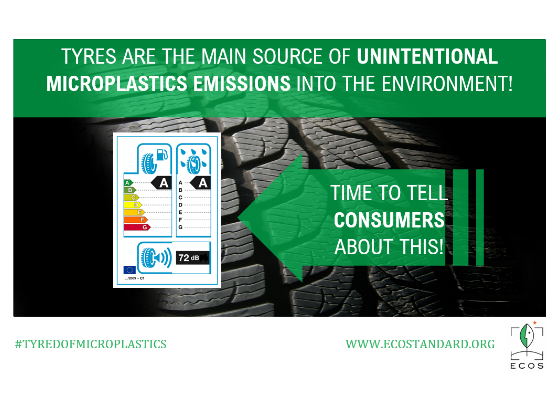
The European Parliament, EU Council and European Commission will have the second trilogue negotiations on the revision of the European tyre label early next week.
ECOS is co-funded by the European Commission and EFTA

 Funded by the European Union. Views and opinions expressed are however those of the author(s) only and do not necessarily reflect those of the European Union or EISMEA. Neither the European Union nor the granting authority can be held responsible for them.