
The list of 'green' claims found on plastic products is longer than ever but often they are as misleading as they sound promising. Too good to be true? Join our webinar for a review of reliable green claims on plastic products!
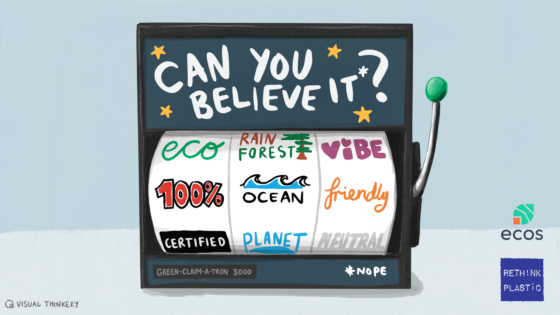
Together with the Rethink Plastic alliance we have examined ‘green’ claims made on 82 plastic items. We have focused on everyday products, including items which are the most common on beaches across Europe such as plastic bottles, bags and cutlery.
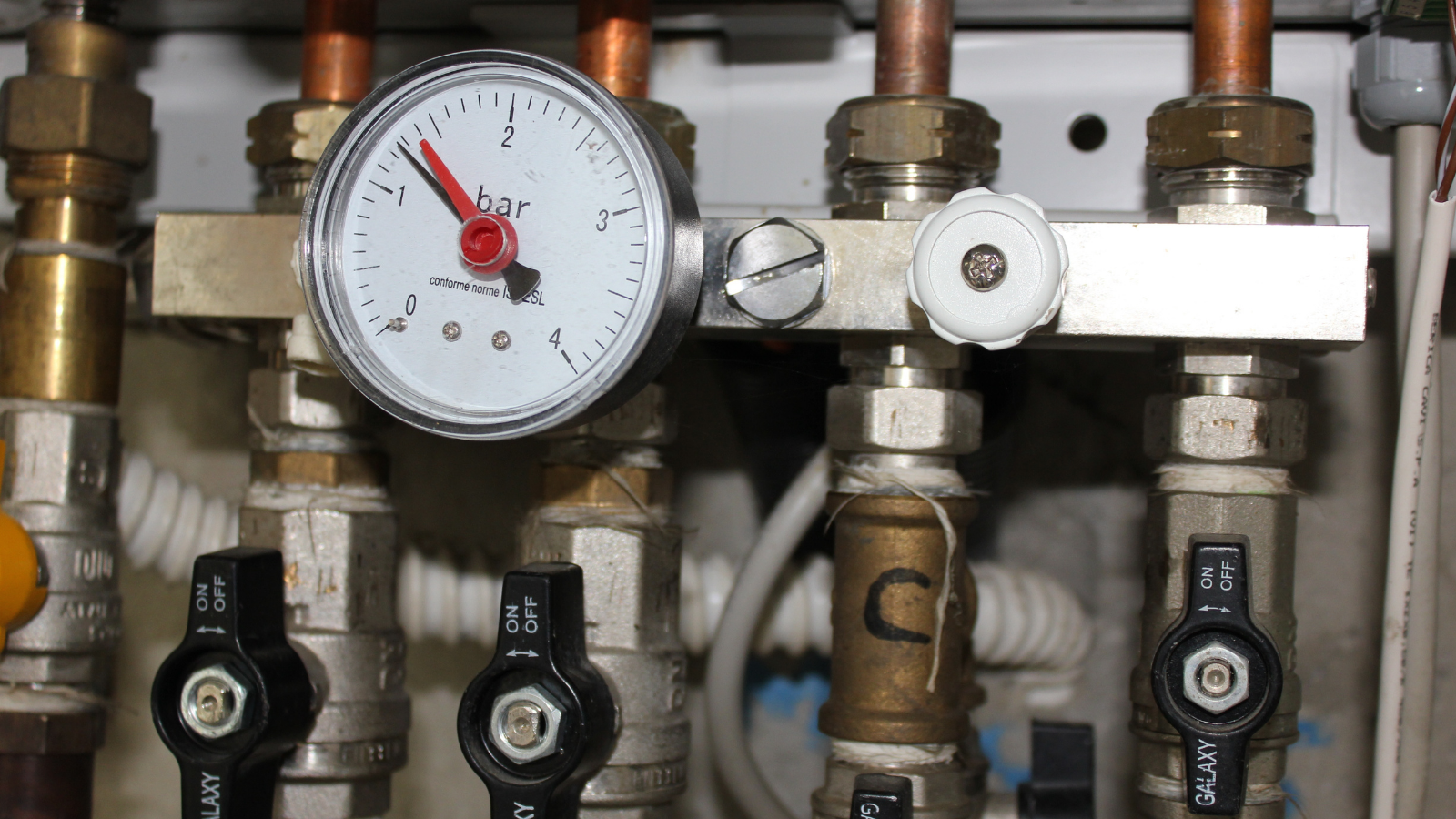
The European Commission’s lack of ambition in phasing out fossil fuel heating systems is jeopardising frontrunners and rewarding laggards, endangering everyone’s climate ambition.

Each year the European Commission publishes an Annual Work Programme for European standardisation. It lays down the Commission’s intentions to use standardisation in support of new or existing legislation and policies, and mandate the development of new standardisation deliverables to the European Standardisation Organisations CEN, CENELEC and ETSI.

 By
By
The updated industrial strategy presented by the European Commission last month lacks clear and sufficient links with the upcoming EU policies for sustainable products. To meet the 2050 net zero targets and make sustainable products the norm, the Commission needs to develop a bolder and more coherent package of measures across its Industrial Strategy and the Sustainable Product Initiative, and take a better approach to the use of standards in this context.

The upcoming Sustainable Products Initiative must be an ‘ambitious tool that makes a difference’, EU Commissioner for Environment, Oceans and Fisheries Virginijius Sinkevičius said as he opened ECOS 20th anniversary event ‘Making Sustainable Products the Norm’.
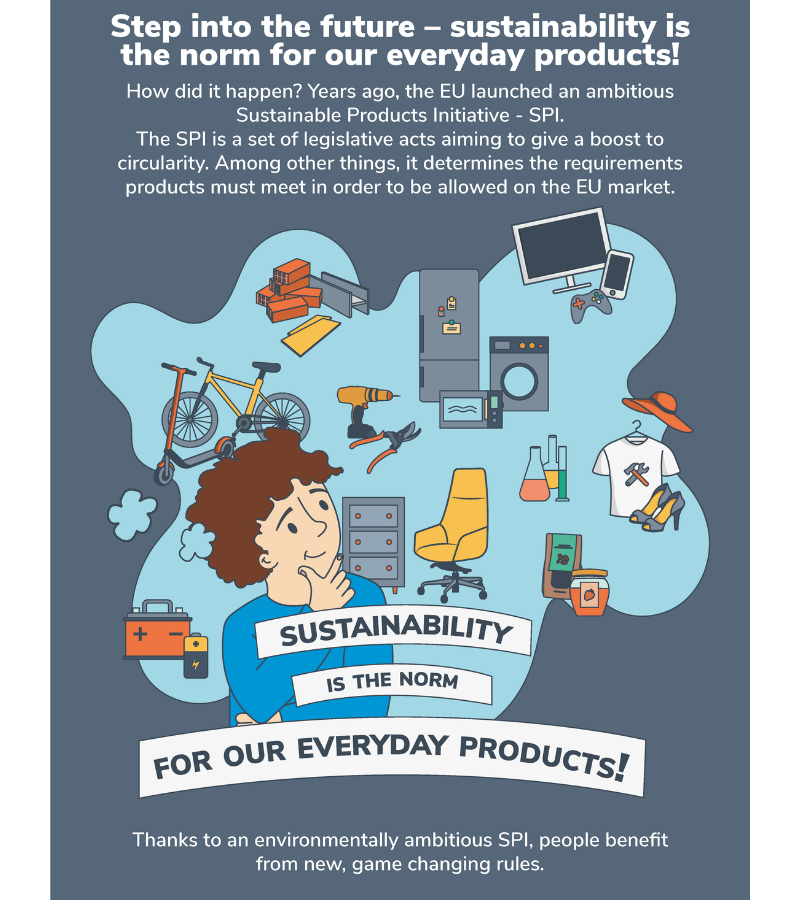
The European Union stands before a unique opportunity to make our everyday products truly sustainable. In December 2021, the Commission is planning to announce the details of its Sustainable Products Initiative (SPI), a set of legislative files meant to boost circularity of the EU’s single market.
ECOS is co-funded by the European Commission and EFTA

 Funded by the European Union. Views and opinions expressed are however those of the author(s) only and do not necessarily reflect those of the European Union or EISMEA. Neither the European Union nor the granting authority can be held responsible for them.