
 By
By
We have teamed up with the Mekong Institute in Khon Kaen, Thailand, to design and implement strategies that not only curb single-use plastics in local street food markets – but could also provide the foundation to develop international standards. We are working with local street food vendors, market managers, and customers to incentivise dining in with reusable tableware, nurture a “bring your own container” culture, and replace single-use plastics with alternative materials.

 By
By
 By
By
Every day we take soil for granted – but there is a whole world beneath our feet, hidden from our view, that is not only teeming with life but provides invaluable support to human existence. On World Soil Day we focus on the need for robust policy, backed by global standards, to both protect and restore healthy soil to elevate its life-sustaining power.
 By
By
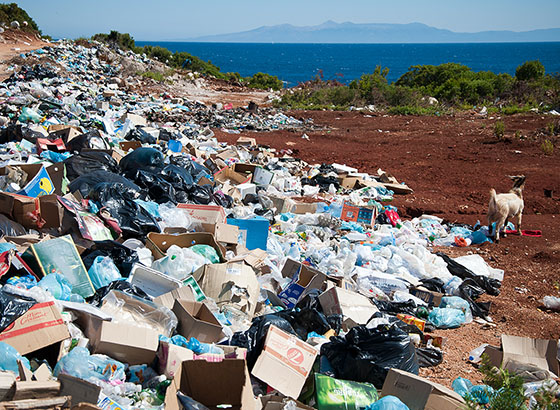
In November 2023, United Nations delegates convened for a third round of negotiations to discuss the ‘zero draft’ of the UN Plastics Treaty – a crucial international initiative to put an end to plastic pollution. Unfortunately, little progress was made with only one year left until the end of the process, but there is also good news: all options remain on the table, with strong indications of how international standards will be integral to the success of the Plastics Treaty.
We are looking for a highly motivated Programme Manager to join our Buildings and Industry team and drive our high-impact work towards a sustainable and circular built environment.
ECOS is seeking to subcontract an organisation/consultancy to deliver a study for an evidence-based report on EU Green Public Procurement criteria.
ECOS has been approved as a liaison to ISO’s committee on consumer policy, also known as COPOLCO. In a world increasingly attuned to the importance of environmental protection and sustainability, the connection between consumer concerns and the environment is stronger than ever. Our new role at ISO will help to reinforce it – on a global scale.

ECOS is looking for experts in the field of Green Public Procurement (GPP) to represent and defend environmental interests, with a focus on construction materials. Experts will provide ECOS with relevant expertise and support in policy processes through the drafting of policy and legal recommendations on the role of different European and national (green) procurement laws currently under development.
ECOS is co-funded by the European Commission and EFTA

 Funded by the European Union. Views and opinions expressed are however those of the author(s) only and do not necessarily reflect those of the European Union or EISMEA. Neither the European Union nor the granting authority can be held responsible for them.