A recipe for change: Transitioning to an agroecological food system
At ECOS, we work across sectors to ensure the technical rules that shape our economies also protect people and the planet. We now bring our expertise to the agrifood sector - where strengthening rules and standards could have profound environmental and social benefits.
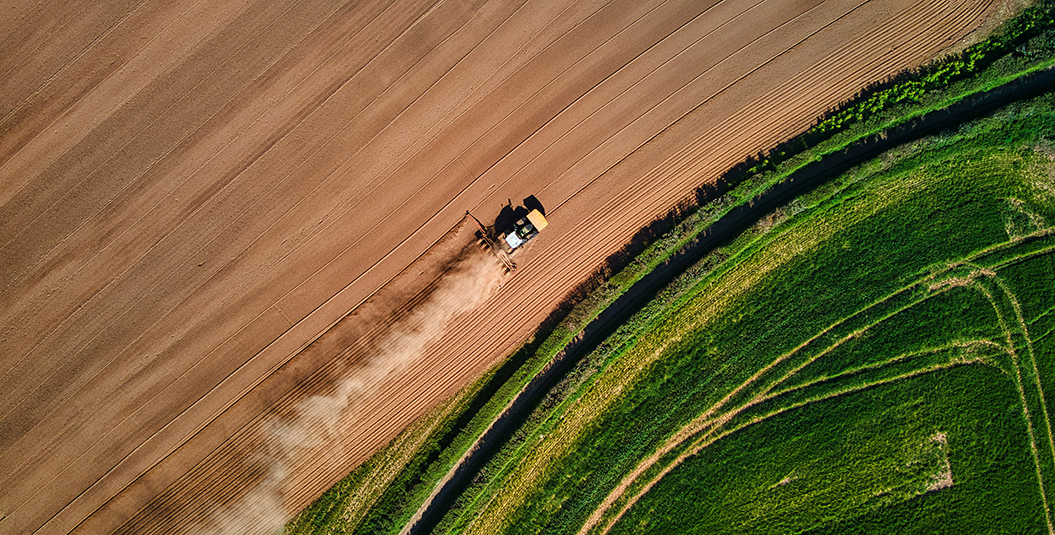
Agrifood is a sector with some of the greatest impacts on climate, biodiversity, natural resources, and human health. The sector therefore poses one of the greatest opportunities. By transitioning to agroecological practices, which aim to farm with nature – not against it – we can change our food systems, so that we produce healthy food for everyone, and at the same time protect and regenerate the land, support farmers, and connect producers and consumers.
Our new food programme will focus on strengthening the rules and standards that underpin the transition to agroecology.
Food and agriculture are at the heart of our interconnected environmental and health crises. Our food system depends on nature, but at the same time puts enormous pressure on it. Healthy soils, biodiversity, water, and functioning ecosystems are essential to produce our food – but current production and consumption trends have turned the agrifood industry into the leading cause of soil degradation, deforestation, and biodiversity loss worldwide, the second largest emitter of greenhouse gases, and the largest consumer of fresh water. The transition to an agroecological food system is a crucial opportunity to address this vicious cycle – a defining environmental and social challenge of our time.
The issue is broader than pollution: our food system also fails to sustainably deliver healthy diets for everyone. In Europe alone, unhealthy diets are a leading risk factor for disease and mortality. Under the current food system, producing healthy diets within planetary boundaries is only possible for half the world’s population. But it doesn’t have to be this way. Food sits at the nexus of human health and planetary health: what we produce and consume has profound implications for both.
We need a food system that makes healthy, sustainable and affordable food the easy choice – one that nourishes people, regenerates nature, and helps bring us back within planetary boundaries.
Changing the way we produce and consume food
Transforming food systems often focuses on what happens on farms or what is on our plates. While these changes are undeniably essential, they are only part of the picture. Across the food system – behind every food product, sustainability claim, procurement decision, financial mechanism, or environmental assessment – there are rules and standards that determine how sustainable food is defined, measured, and rewarded. The way environmental performance is assessed can determine which procurement criteria influence what buyers demand, which finances farmers can access, and which sustainability labels can shape consumer choice and market access.
Our goal is simple: help shape the rules of the food system so that sustainable choices become easier to support, identify and, ultimately, the norm.
At ECOS, our work on food centres on two complementary priorities:
Creating the conditions for agroecological food systems
To transition to agroecological food systems, we must change the way food products are designed, foster more sustainable production, and ensure that farmers are supported in adopting more sustainable practices.
To achieve this, we work on sustainable public procurement and nature credits, helping ensure that markets and finance reinforce (not undermine!), the transition to agroecology. ECOS works to ensure these mechanisms genuinely support farmers and communities transitioning towards agroecological production.
We support the Ellen MacArthur Foundation’s Circular Design for Food Framework, which provides the necessary principles and roadmap to redesign food products – so they actively support the transition to agroecology. Instead of focusing only on reducing the impacts of existing food products, circular food design looks at how food products can be designed around ingredients, sourcing, and production systems that support biodiversity, healthy soils, and more resilient agricultural landscapes. ECOS brings these principles into discussions on policies and standards, shaping the future of sustainable food products.
Our priorities:
- Support the development of mandatory sustainability criteria in public food procurement, to create reliable demand for more sustainable food.
- Promote circular food design principles in discussions on policies and standards related to sustainable food products and production processes.
- Contribute to the EU’s work on nature credits so that these schemes support ecosystem restoration and provide meaningful income opportunities for farmers – while avoiding greenwashing and ensuring strong public governance.
Defining agroecological food systems
The transition to an agroecological food system starts with one question: How do we know what “good” looks like?
Today, there is no common approach to assessing the environmental performance of farms or food products. Farmers face an increasingly fragmented landscape of sustainability assessments, certification schemes, and reporting requirements. Similarly, consumers are confronted with too many labels that often provide incomplete or inconsistent information. Without credible and harmonised sustainability assessment methodologies it becomes impossible to understand what is truly sustainable, to reward good practices, and to build trust in sustainability claims.
ECOS works to strengthen environmental assessment methodologies, so that they are complete, science-based, transparent, and meaningful. Specifically, we:
- Contribute to the EU benchmarking system for on-farm sustainability assessments.
- Shape the revision of the Product Environmental Footprint methodology for food.
- Develop circularity indicators for food products.
- Support the development of relevant international standards such as ISO TS18244 on guidelines to improve biodiversity performance of food companies and food retailers.
We are not alone
This transformation requires collaboration across farmers, policymakers, researchers, businesses and civil society. No single organisation has all the expertise needed to tackle such a complex challenge and ECOS is proud to contribute to this broader movement as a member of the EU Food Policy Coalition, working alongside organisations advocating for a fairer, healthier, and more sustainable food system.
Watch this space as we continue to grow our food programme – follow our social media pages and sign up for our newsletters.

