
No nature, no future: Why biodiversity standards matter
 By
By  By
By Nature is the living system that makes all economic activity possible. From clean water, filtered by forests, to birds controlling crop-eating insects, nature quietly sustains us every day. Businesses and governments therefore have a lot to gain from understanding how their decisions impact ecosystems. Life’s intrinsic right to exist is inalienable and rules to protect it need monitoring to check that they are effective. But how do we measure impacts on biodiversity? And how can we use that information to improve how we steward ecosystems?
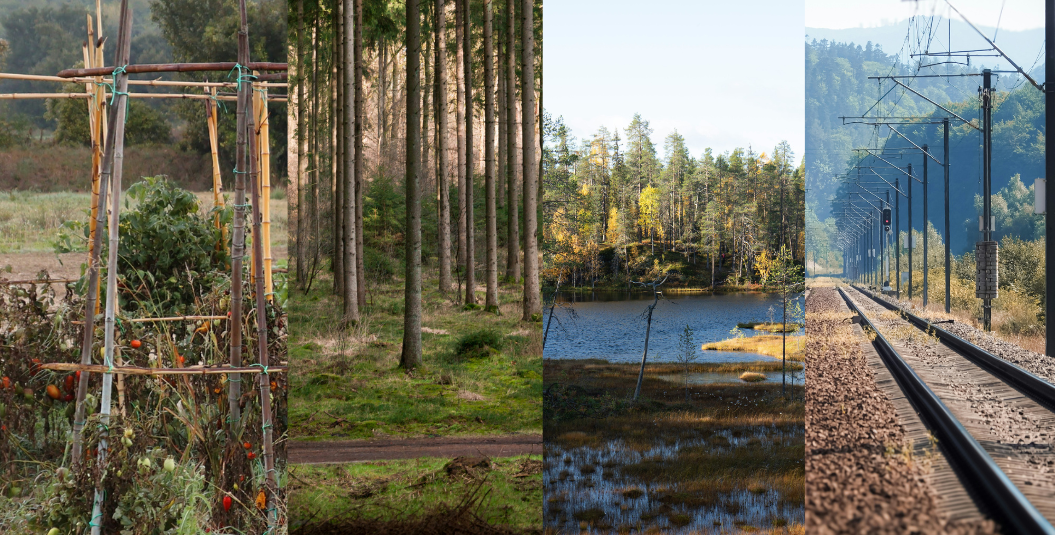
A vegetable farmer in Italy receives a premium for her produce – to support her transition to organic agroforestry – with special support to plant trees that protect the crops from intense heat.
A forest owner in Germany receives public funding to replant biodiverse forests (instead of monocultures), which help bring back rare woodpeckers and improve resilience to pests.
An investment fund in Luxembourg discloses that financing wetland restoration in Finland helps revive bird habitats and reduces flood risks for local communities and companies.
A railway developer in Romania finances ecological corridors alongside a modernised railway, helping bears and lynx move safely between forests.
What links these different examples is not only an investment in nature, but also the need to demonstrate the genuine environmental benefits of these investments. But how do we measure? How do we verify? And at what cost? These questions are fundamental. Methods to measure ecosystem health not only establish how we track progress on biodiversity commitments, but they also determine which actions on biodiversity are effective, and which are simply greenwashing.
As systems of payments for ecosystem services (PES) are becoming active, accurate data to track both biodiversity loss and positive nature outcomes is more crucial than ever. At the same time, as some policymakers call for rolling back environmental safeguards in the name of competitiveness, robust biodiversity monitoring remains essential to understand whether nature protection measures are working and where stronger action is needed.
Measuring biodiversity consistently
Recent global policy efforts have converged towards taking better care of nature, including the UN Global Biodiversity Framework to halt and reverse biodiversity loss. In Europe, policymakers with the support of many companies and civil society, developed new frameworks for biodiversity restoration – setting a clear direction of travel:
- The EU Nature Restoration Regulation sets binding targets to restore at least 20% of the EU’s land and sea areas by 2030.
- The EU Corporate Sustainability Reporting Directive’s disclosure obligations for companies regarding biodiversity-related impacts, risks, and opportunities.
- The EU Roadmap towards Nature Credits outlines how the private sector can invest in nature restoration.
These initiatives recognise that only consistent and reliable biodiversity monitoring can guide effective action, but they fall short of prescribing the methodological detail that is required to guide monitoring.
It is a fine line between biodiversity information and greenwashing – so new standards need to set the methodologies behind the monitoring, and establish what counts as sufficient evidence to identify biodiversity harm or to claim biodiversity restoration in farming, forest management, or in natural area conservation and restoration.
How ECOS helps shape biodiversity standards
Defining the rulebook for monitoring
When a company claims its operations have a net positive impact on a local ecosystem, what does it actually mean? When a nature credit is sold to an investor, what has been verified? ECOS works as one of the few CSOs actively shaping biodiversity standards to ensure corporate claims are trustworthy, thanks to robust and standardised monitoring methods.
ECOS supports the development of ISO 25970, for example, a standard that will guide biodiversity monitoring in managed forest landscapes. Unlike certification schemes, such as FSC or PEFC, which focus on product labelling through third-party audits, ISO 25970 addresses the how of biodiversity monitoring, by providing guidance on data collection, analysis, and reporting at forest management unit level. If well designed, it could shape corporate reporting, inform payments for ecosystem services, and support future forest monitoring legislation.
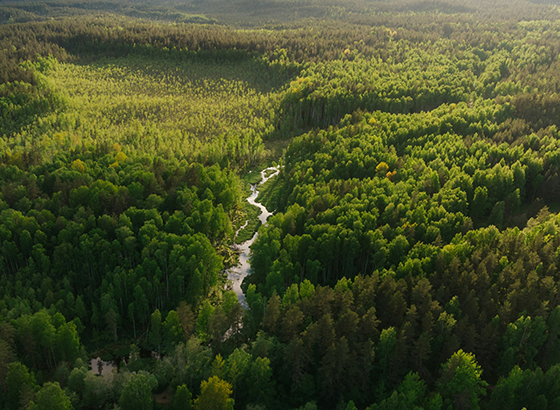
Spotting the forest giants, down to microscopic beings
Biodiversity monitoring is complex because there is no single metric equivalent to a tonne of carbon. Ecosystem health is multidimensional, from the smallest microorganism to the tallest tree, therefore robust monitoring requires combining multiple approaches.
- Remote sensing (including from EU-managed satellite systems like Copernicus), provides increasingly detailed imagery and data on planetary scale, enabling forest cover monitoring in near real time, or tracking large animals.
- On-the-ground ecological surveys add site-specific knowledge that satellites cannot capture alone, revealing the life in soil or water ecosystems, with methods like eDNA sampling.
None of these methods are sufficient on their own, however. We need to agree on which indicators to use to meet biodiversity goals, or where to set the bar for restoration projects’ targets, alongside a host of other questions. Monitoring results need to be independently verified to be credible. This is especially important in the context of the emerging nature credit market, where one landowner’s claims of restored ecosystem health may be counted as another company’s voluntary biodiversity contributions, or possible legal compliance obligations.
EU Nature Credits
ECOS participates in the EU Expert Group on Nature Credits to help develop these methods. Certifying nature protection and restoration projects requires reliable measurements of ecological health. Embedding strong standards into the framework could help policy instruments, based on polluter pays principles, deliver genuine biodiversity gains.
This expert group is an opportunity to discuss how to restore nature through certified land protection and improved management practices and to support the livelihoods of land stewards with new incomes, including farmers. Credit systems are far from assured success though, as nature defies market logic.
Whether we seek to protect nature through regulation, public investment, corporate accountability, or emerging payment schemes – they all depend on reliable information about ecosystem health. Without credible monitoring, neither environmental safeguards nor financial incentives can deliver genuine biodiversity gains.
To protect and restore nature, the public and private sectors should commit to developing and using credible biodiversity monitoring. We can draw upon real ecological expertise and new technologies to adapt our practices and regenerate ecosystems. Not trying hard enough would mean losing grounds in sustaining our health and our economies. Nature cannot afford low ambition – which is why ECOS works to ensure environmentally sound standards and monitoring frameworks.

