Ecodesign for furniture: The unbearable lightness of making things
 By
By  By
By The EU process to set mandatory ecodesign requirements on furniture to improve their environmental performance has begun and ECOS recently submitted a response to the European Commission’s survey. Learn more about what ecodesign for furniture means in an excerpt from an interview with industrial designer, Christine Birkhoven.
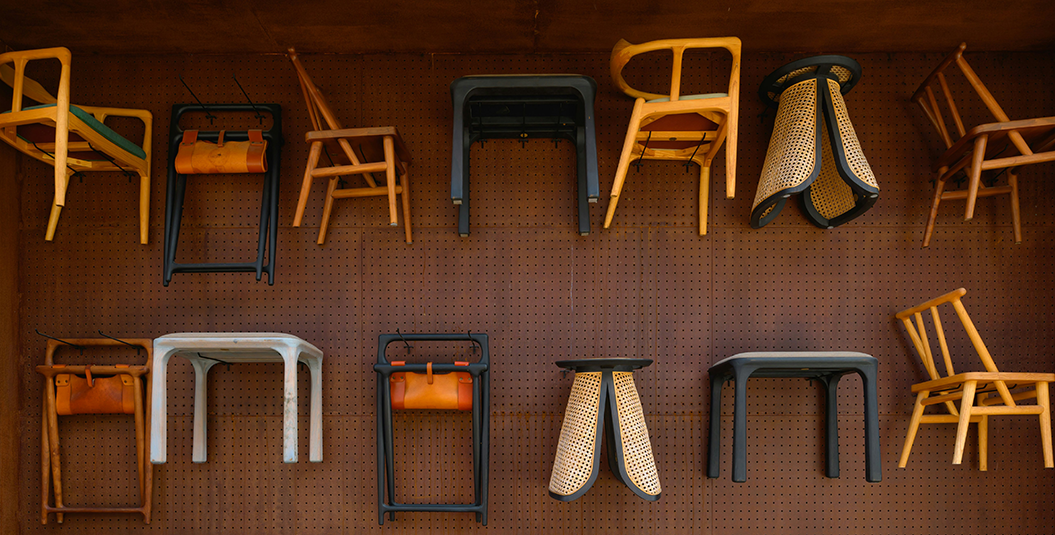
In our response to the European Commission’s stakeholder survey we emphasise that the current priority is to ensure that the scope includes all products functioning as furniture, irrespective of their material composition, and to focus on circularity aspects that support the design and manufacture of safer and more sustainable products that are used for longer.
Furniture designed for a circular economy should be durable and easily disassembled, this allows furniture to be easily maintained, repaired, refurbished, customised, and kept for longer – even when their owner moves. In this way, the EU’s Ecodesign for Sustainable Products Regulation (ESPR) can support consumers to use their furniture longer and enable a level playing field for circular business models.
Interview by Christine Birkhoven, January 2026.
Christine Birkhoven is a Chilean-German industrial designer, researcher, and lecturer based in Zurich. Her research examines how sustainability regulations are reshaping product design. She spoke to ECOS Senior Programme Manager, Emily Best earlier this year about the EU’s new ecodesign rules for furniture and the potential impact on product design.
The following is an excerpt from that interview. You can read further in Christine’s interviews with designers, regulators, and other ecodesign experts from across Europe in her recent publication: The unbearable lightness of making things [DE].
I began by asking Emily how difficult it was to promote ecodesign in the face of all the political chaos.
Emily Best, Senior Programme Manager at ECOS: ‘I think our work set an ambitious goal. We said that we wanted this big policy dream. And now it‘s more like we‘re playing on the defensive, saying ‘don‘t cut this.’ However, since last summer [2025], the focus has shifted towards protecting existing regulations and preventing their weakening.’
I wonder how we can keep this topic at the forefront of the agenda. Emily talks about the increasing focus on economic and strategic benefits: more efficient products reduce energy use and save consumers money. Durability and repairability also provide direct benefits to users. At the same time, they enhance resource security by lowering material demand and reducing dependence on imports – both of which are key aspects of a circular economy.
I then asked Emily if she thinks that the ESPR [Ecodesign for Sustainable Products Regulation] can genuinely help to advance the circular economy in Europe.
Emily: ‘The ESPR framework is strong, but its real impact will depend on how it is implemented, since the requirements of each sector will be defined in separate delegated acts. A lot of people who aren’t as familiar with the ESPR think that every performance requirement that could be considered will be part of that delegated act. But that’s not really true.’
What will be the most challenging part of implementing the ESPR?
Emily referred to tyre research as an example – in this area, ‘there is a significant imbalance in the availability of information, with most data being held by industry and not openly shared. Due to confidentiality and limited transparency, particularly with regard to chemical composition, even regulators and researchers lack access to vital information, rendering parts of the sector effectively a “black box”, a lot of information just isn‘t made public. Of course, industry pushback persists, with companies often claiming that they lack access to the necessary information themselves. However, the intention of the regulation is precisely to force greater transparency. In some cases, companies reportedly do not fully understand which chemicals are used or what they do.’
Consequently, when developing product requirements there is often insufficient data to determine how to improve them. Proposed measures are sometimes rejected due to cost concerns, as ESPR rules aim to avoid significant price increases. While many potential requirements are listed, it remains unclear which will actually be implemented, and there is no guarantee that each will lead to concrete improvements in delegated acts.
Perhaps that is why plastics are not included in the ESPR. They are so complex that including them would most likely just overwhelm everyone further. From a consumer perspective, however, plastics and polymers should be included in the regulation, since harmful additives affect health and the environment. Improving products without addressing their material base is insufficient.
Emily: ‘What I‘m interested in seeing for furniture, regarding all aspects, is which sectors exactly are being covered and what the scope will be. As seen in textiles – where the focus was narrowed to apparel – the EU may also limit furniture to specific product groups. Perhaps the scope will depend on the materials the furniture contains, or the sectors in which furniture plays a bigger role in terms of replacement, such as in large offices, or in response to the trend of ‘fast furniture’. This could simplify implementation, but may not reflect the sector’s diversity. Repair, for example, needs vary by furniture type: simple items like tables require little maintenance, while frequently used or complex products like office-chairs need more repair and different design considerations.’
I mentioned the Ecodesigned4LIFE report written by ECOS. I found the proposal to develop a labelling system linked to the ESPR very interesting. All the guideline principles are present, such as clarity, usability, and coherence across product groups, but there is also a clear awareness that information overload could easily undermine them.
The European Commission has proposed some initial label designs, but their quality varies. The preferred option is a clear and familiar format, similar to the energy label, which uses colour scales and simple icons to communicate key information. The goal is not only to inform consumers about environmental impact, but also to encourage improvements in all products and reduce harmful emissions, rather than simply comparing “better” and “worse” options. For furniture, potential label criteria could include durability and repairability, but the exact indicators are still unclear. Other likely aspects are material-related – such as recyclability and recycled content. Final decisions will likely depend on stakeholder input.
You can read more interviews with designers, regulators, and other ecodesign experts from across Europe in Christine Birkhoven’s publication: The unbearable lightness of making things [DE].
Following the submission of the stakeholder survey, we now wait for the preparatory study on furniture to see the level of ambition they are proposing. Together with our LIFE-project consortium partners and other civil society organisations, ECOS will follow and contribute to the future process to raise the ambition towards a circular furniture economy.

