
In our final newsletter of 2024, we take a look back at just some of the year's highlights across our global network of members, experts, and partners - as well as our usual monthly updates. We extend our thanks to all of our members, experts, funders, partners, and colleagues for their tireless efforts this year - we look forward to continued success with you in 2025!

At our annual conference this month we released our new report, which shows that green public procurement could cut construction product emissions by almost half! Thanks to all of our supporters who attended the conference and provided insightful discussion. Elsewhere, we look to the ongoing Plastic Treaty negotiations this week. A lot is at stake, but there is still hope – we've outlined five essentials for an effective Plastics Treaty.
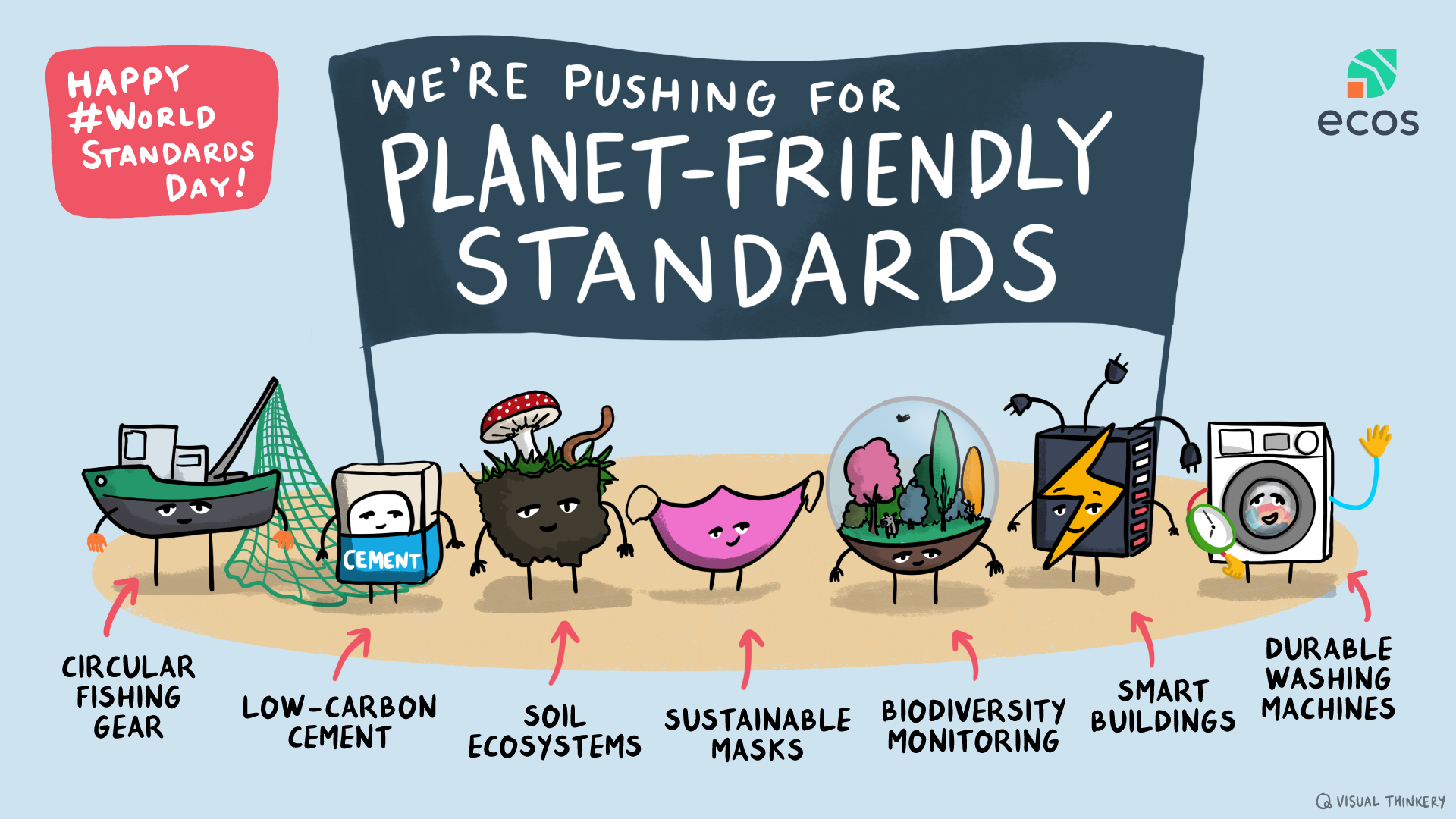
This October we marked World Standards Day by introducing some of the standards we’re working on to the wider public - a popular way to showcase our important work in this area. For over 20 years, we and our members have been raising the environmental voice in standardisation and pushing for ambitious, inclusive standards.

We’re excited to announce that registration is open for our conference in November. We will be discussing construction and green public procurement - join us for this hybrid event! This month we have also been expanding the work of our ECOS Africa office. We are working with local and international partners to leverage policies and standards to address plastics pollution in the region. We are also celebrating a new standard for the circular design of fishing gear; learn more in our September newsletter!
Measuring carbon reductions is important for accurate green claims, but not all methods are equal. In our latest blog we write about how standards can provide us with a harmonised approach that enables fair, accurate, and comparable data. This month we’ve been calling for more transparent and accessible negotiations for the Global Plastics Treaty. We also have a number of new open calls for experts in multiple areas as we expand our work.
We continually strive to expand the impact of our work, leveraging both standards and policy to support environmental goals. We will now be working in closer collaboration with standardisers in Africa through our new cooperation agreement. This month we also announced a new project to address the environmental impact of data centres and we released new research showing that the uptake of cleaner electric cooking hobs is increasing in Europe as the prices of electric alternatives are falling. Crucially, the importance of clean cooking in Africa is also gaining more attention from the International Energy Agency.
As the seasons begin to change, we become more aware of how we heat or cool our offices, buildings, and homes. The heating and cooling of buildings is responsible for 80% of energy consumed by EU households, but less than 25% of that comes from renewables. ECOS has joined a new coalition to decarbonise heating and cooling. This month we’ve also been looking at standards to ensure smart and flexible energy supply for electric devices like heat pumps, and we’re calling on the EU for a fossil fuel boiler definition that will help support EU climate goals.
ECOS is co-funded by the European Commission and EFTA

 Funded by the European Union. Views and opinions expressed are however those of the author(s) only and do not necessarily reflect those of the European Union or EISMEA. Neither the European Union nor the granting authority can be held responsible for them.