Rooting carbon accounting techniques in reality
Over 1000 organisations globally have committed to or have already set net zero targets. With unique expertise on carbon accounting techniques and standardisation processes, ECOS continues to be a leading voice in the global debate that will determine if these commitments are translated into real and deep emissions reductions.
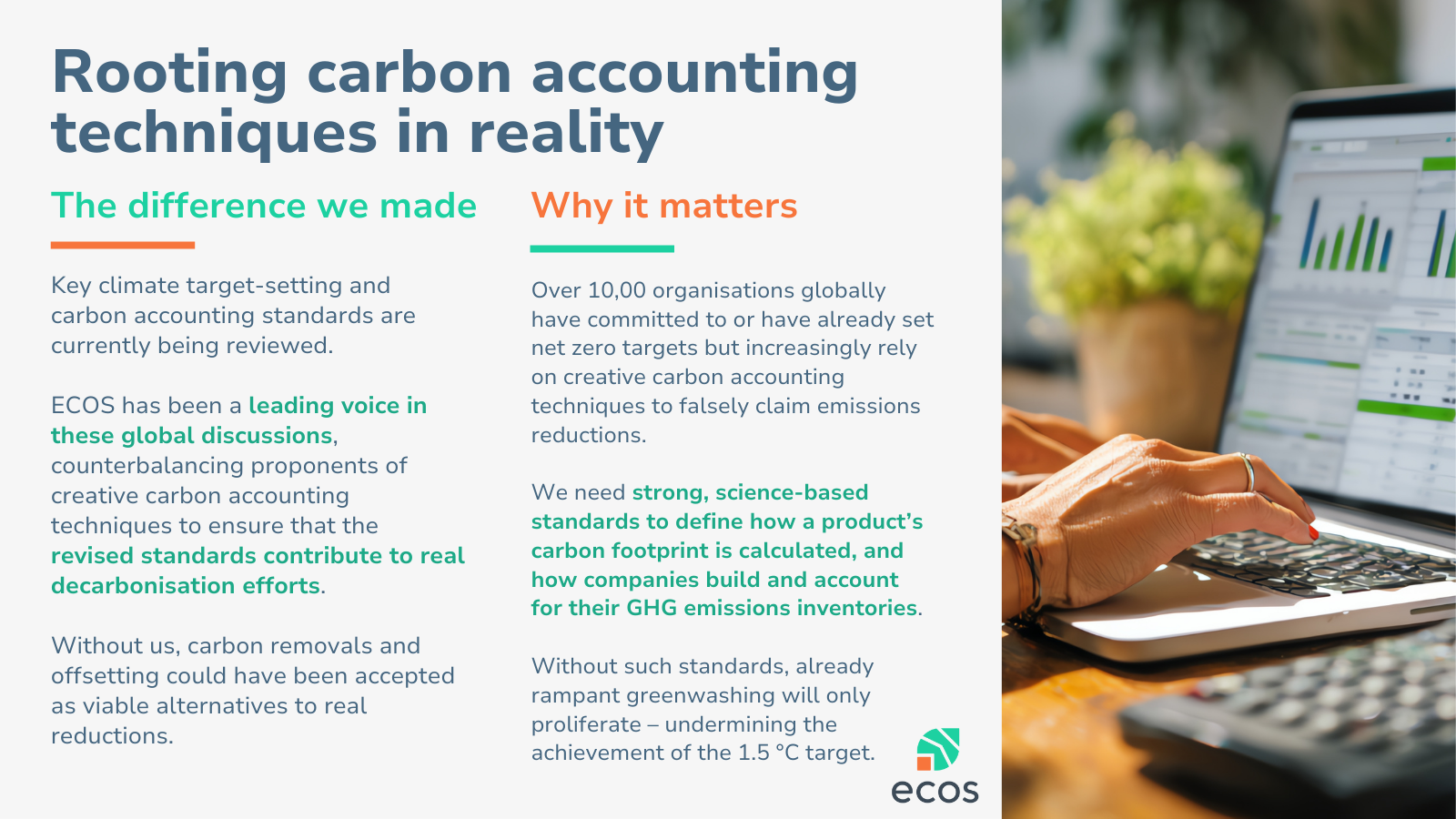
Companies that have committed to net zero targets are increasingly relying on creative carbon accounting techniques, like Environmental Attribute Certificates (EACs) to claim emissions reductions. The issue with these certificates is that they risk decarbonising on paper only by using dubious Chain of Custody models, such as credit mass balance.
The highly technical nature of these discussions makes them susceptible to misinformation – and that is why our work focused on translating complex carbon accounting principles into sector-specific examples. For example, our factsheets spotlighting the use of EACs in the steel and cement sectors helped policymakers understand real-world risks on trade and for consumers. Our efforts also established important visibility in mainstream media, including major outlets like Bloomberg.
Behind the scenes, ECOS contributed expert inputs to shape key international climate-target setting standards. We toned down the role of credits in ISO 14060 and 14064-1. In ISO 14021 on self-declared green claims, we minimised the role of market-based accounting techniques. We also ensured that claims relating to attributed (not actual) recycled or biobased content contain adequate disclaimers for consumers. Stronger labelling standards mean consumers can make informed decisions and drive demand for genuinely sustainable products.
Our work strengthening alliances between civil society organisations and academics was essential to counterbalancing strong corporate lobbying. Together, we continue to be a united front against unscientific accounting mechanisms. A front without which carbon removals and offsetting could have been accepted as viable alternatives to real reductions – pushing us further away from climate goals.
By shaping how future standards define credibility, our efforts in 2025 locked in high ambition and transparency in corporate climate action for the years to come. With climate-target setting standards expected to be published in 2026 and carbon accounting standards expected to be finalised in 2027, we will continue improving tools supporting corporate accountability.

