Managing what is measured: making Environmental Product Declarations better
With approximately 97% of the EU building stock to be upgraded, sufficiency and proactive material selection are necessary to reduce resource extraction and embodied carbon in the construction sector. However, we can only choose sustainable materials if information on the environmental performance of products is reliable and comparable.
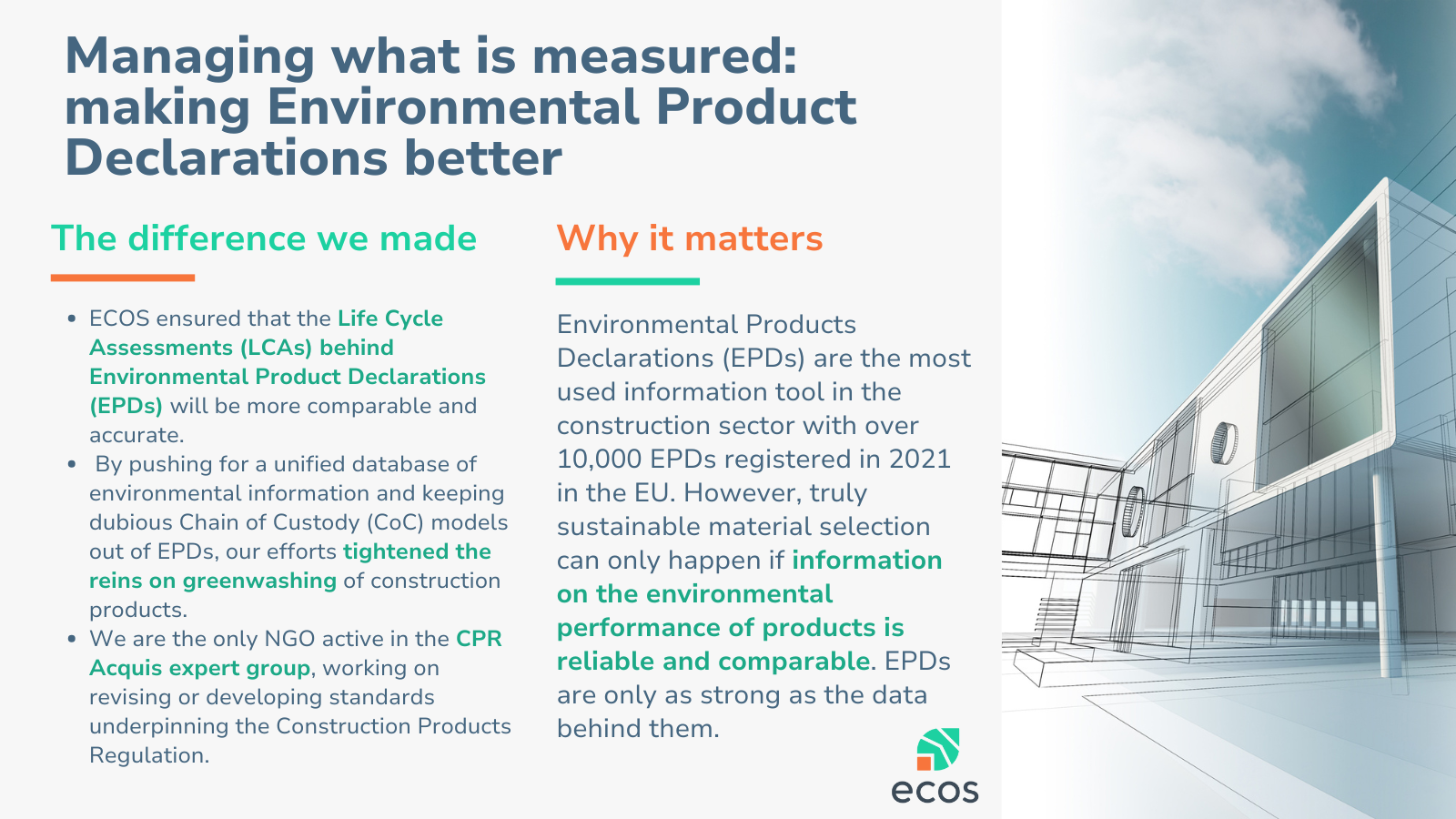
The disclosure of environmental impacts, previously voluntary, will become mandatory under the new Construction Products Regulation (CPR). To do this, Environmental Products Declarations (EPDs) are the most used information tool in the construction sector. Over 10,000 EPDs were registered in the EU in 2021 alone!
But EPDs are only as good as the data behind them. That is why ECOS pushed for the creation of a unified database of environmental impacts. Until now, average values from two – sometimes conflicting – commercial databases were used when companies did not have first-hand data. In the future, the EU will provide these standard values as well as a calculation tool. Having more reliable EPDs protects consumers – whether they be businesses, public procurers, or direct customers – from dubious green claims.
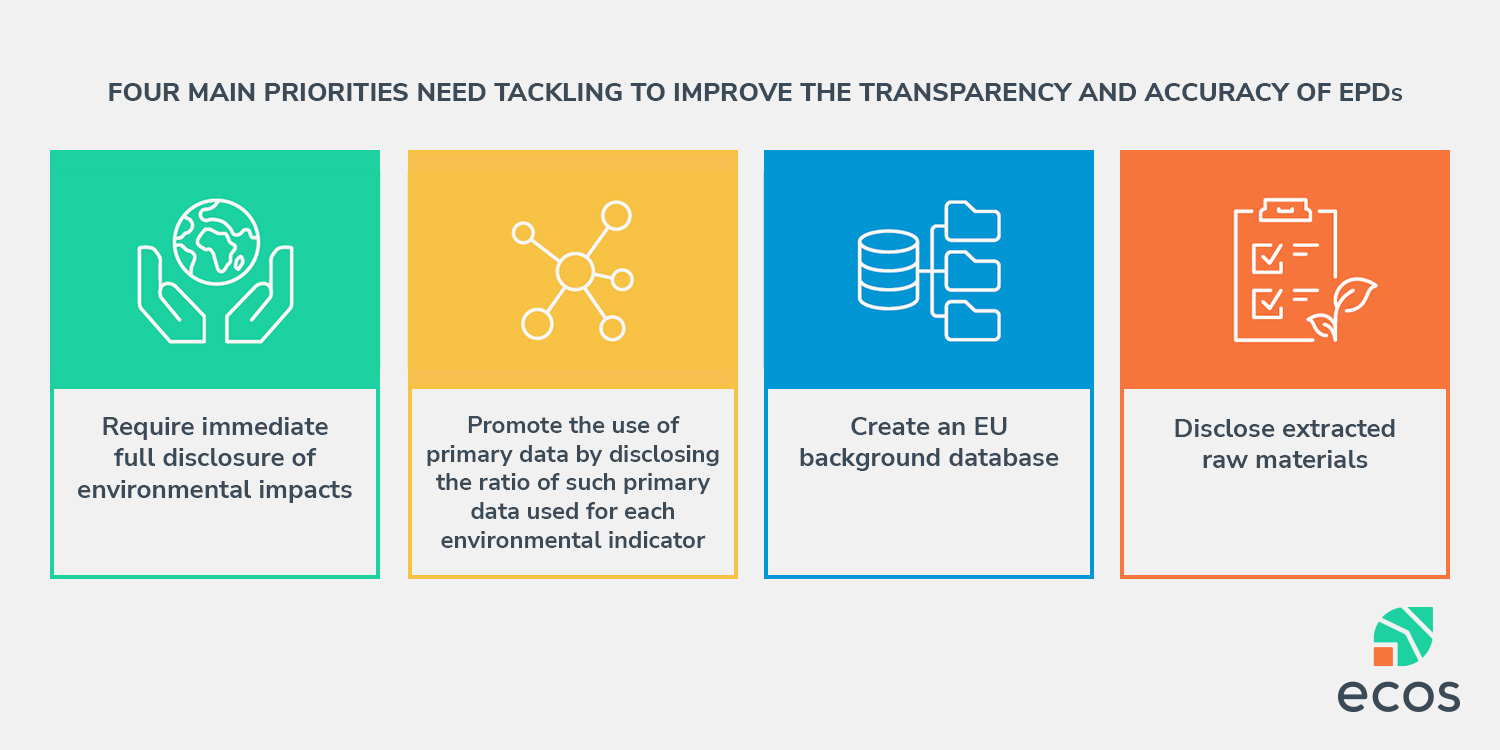
ECOS is the only NGO active in the CPR Acquis, a technical expert group established by the CPR to support the European Commission and Member States in revising or developing standards underpinning the Regulation. Without our expertise, EPDs could continue to use different databases to make lifecycle assessments, resulting in cherry-picking between data to make a product appear greener than it is.
Next to this, discussions started in the European Committee for Standardization (CEN) to allow for credit mass balance in EPDs. The trouble with credit mass balance is that the declaration on a product, such as steel, is merely a marketing attribution rather than related to the product itself, meaning that products could be marketed as greener than they are.
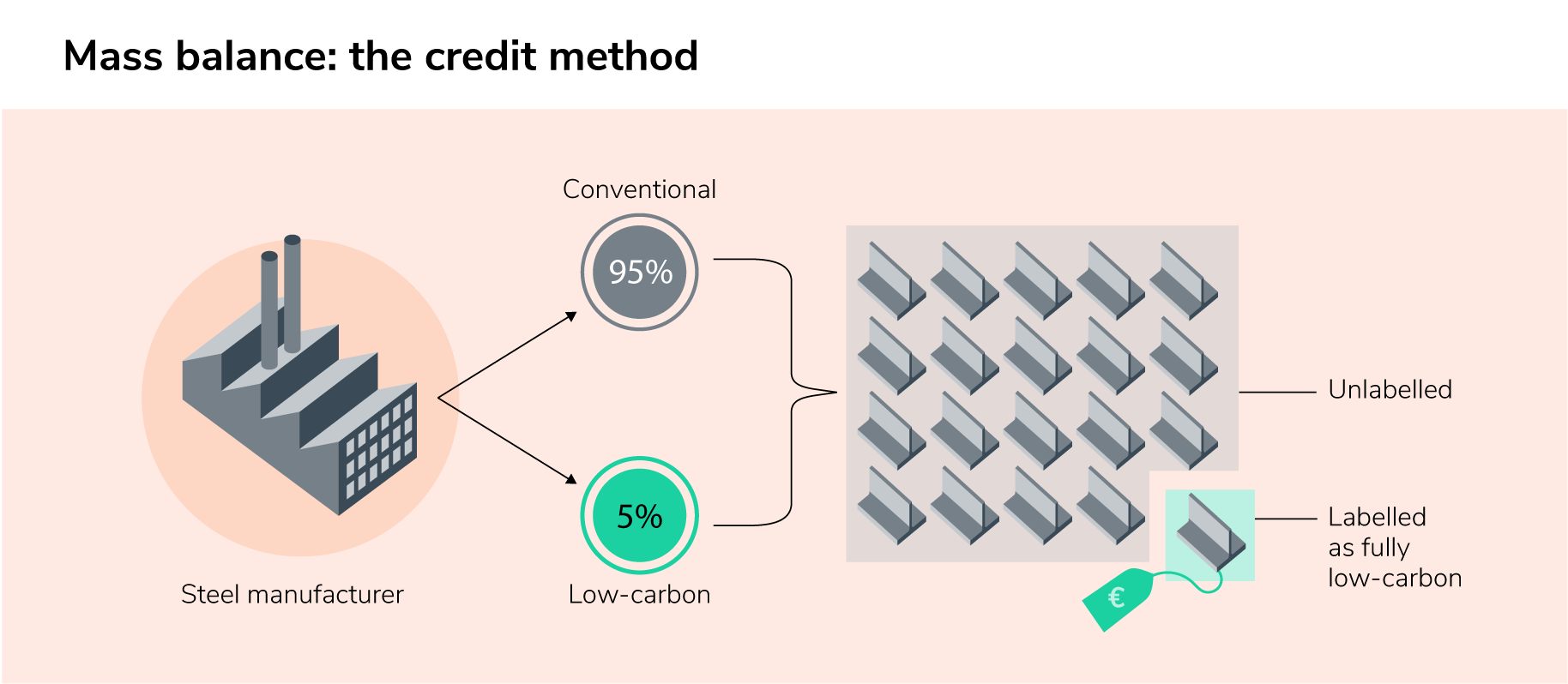
ECOS was recognised as an authoritative leading voice in technical discussions, and we worked with other progressive stakeholders against including credit mass balance methods. Our engagement ensured that credit mass balance will be kept out of EPDs in the years to come.
ECOS stands ready to continue driving the decarbonisation of construction products – ensuring that information on the environmental performance of products is reliable and comparable is the first step towards this.

